EMERGENTS
ICEMR
West-Central Africa: EMERGENTS ICEMR
advancing malaria research, surveillance, and control through the implementation of applied genomics and translational systems biology approaches in an exigent malaria nexus of West and Central Africa.
Lead Institutions: University of Florida (USA), African Centre of Excellence for Genomics of Infectious Diseases (Nigeria), and the Centre for Research in Infectious Diseases (Cameroon)
Research goals
the West-Central Africa Enhancing Malaria Epidemiology Research through Genomics and Translational Systems biology (EMERGENTS) ICEMR program leverages successful, well-established collaborations, unique research and training infrastructures, and an extensive Sub-Saharan Africa (SSA) research network to address emerging and challenging issues in malaria transmission in the region. EMERGENTS ICEMR is built on a proven research platform and consortium, including the of World Bank, the Wellcome Trust, the African Academy of Sciences, research centers of excellence in Nigeria and Cameroon funded by the NIH and the Centers for Disease Control and Prevention. By leveraging existing infrastructure, the ICEMR team can launch directly into « advancing science », assuring implementation of rigorous and advanced approaches to tackling high-priority emerging and re-emerging issues in malaria that remain as significant impediments to achieving malaria elimination and eradication (MEE). The robust consortium of renown malaria research and program partners involved in this program assures the implementation of rigorous and advanced approaches to tackling high priority emerging and re-emerging issues negatively impacting progress toward the 2030 Sustainable Development Goals (SDGs) for malaria, namely reducing case incidence and related deaths by at least 90% against a 2015 baseline

United States
U.S. research centers provide scientific leadership, advanced analysis, and consortium coordination for the project.
Federal Republic of Nigeria
In Nigeria, activities of the EMERGENTS ICEMR are implemented in 3 health facilities located in Lagos …
Republic of Cameroon
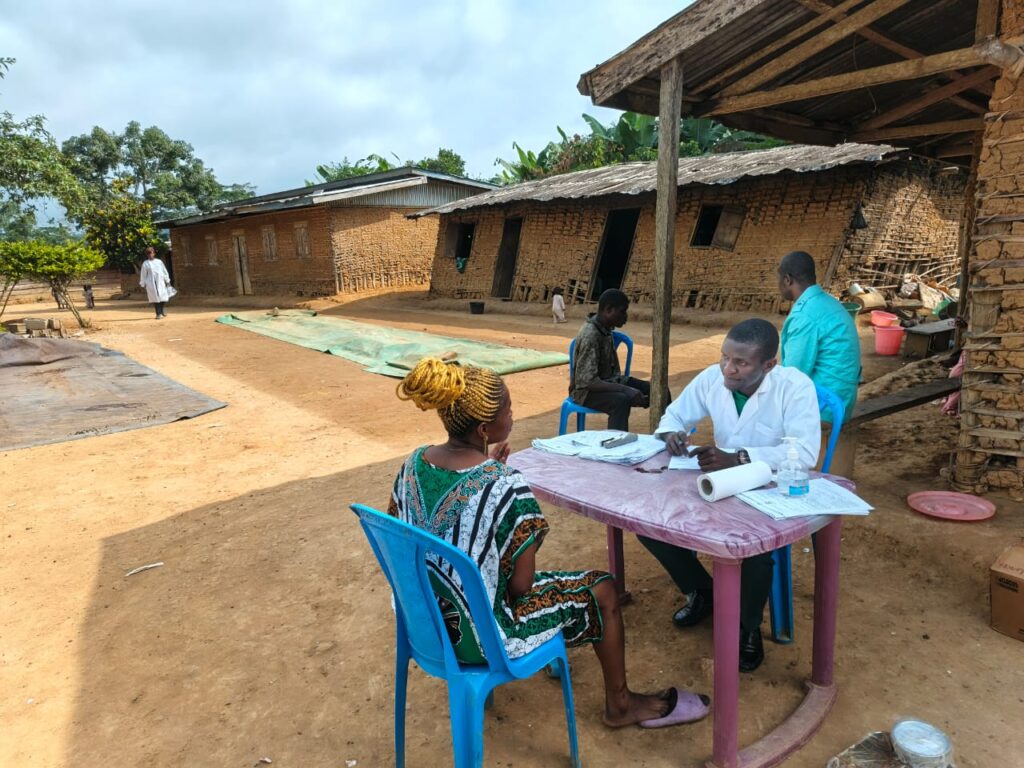
In Cameroon, activities of EMERGENTS ICEMR focuses in Douala and Yaoundé, the two most important …
Strategy
the EMERGENTS ICEMR will tackle two major knowledge gaps and emerging obstacles to achieving MEE:
- non-falciparum malaria. Expansion of Plasmodium vivax (Pv) cases (in Duffy-negative individuals), non-falciparum malaria (NFM), and low-density and submicroscopic malaria, either as mono- or mixed-infections with P. falciparum (Pf), is a considerable challenge to achieving MEE. Importantly, P. ovale (Po), representing two different species (P. ovale curtisi and P. ovale wallikeri), which like Pv has a dormant liver stage complicates control, impacts the understanding of clinical disease in Africa, and raises challenges for the understanding of parasite-parasite and parasite-host interactions. « Benign » NFM infections have now been recognized to be a significant cause of (severe) clinical illness and escalating morbidity and mortality.
- insecticide resistance (IR) of « primary » vectors and « secondary » mosquito vectors. In Cameroon, sixteen anopheline species vector malaria parasites, six of which are considered the « major » vectors: An. gambiae, An. coluzzii, An. arabiensis, An. funestus, An. nili, and An. moucheti. Widespread IR for An. gambiae, is well established but less is known for An. coluzzii, an emerging primary malaria vector, which has already developed pyrethroid resistance. An. funestus has also been shown to be the main vector not only for Pf mono-infections but also for Pf/NFM and Po/Pv/Pm mixed infections in this region. Broad generalizations with respect to distribution, abundance, species composition, zoophilic vs. anthropophilic and exophagic vs. endophagic behavior of funestus group members may in fact not hold true. Local temporal and spatial variations should be further explored to fully support MEE efforts.
To address these challenges, the ICEMR team will:
- develop parasite genotyping platforms to create advanced genomic tools tailored for studying NFM transmission, including subsequent development of field- deployable genomic approaches to support parasite and vector surveillance as well as basic and applied research.
- implement field-deployable laboratory techniques to increase testing speed, sensitivity, and accuracy of measurements for sporozoite infection status of mosquitoes.
- test novel insecticide synergists and chemical actives in country that were designed to kill insecticide- resistant mosquitoes against sampled vector species in Cameroon and Nigeria.
- establish an LMIC-suitable template for the application of Systems Translational Biology (metabolomics and proteomics) to understand the contribution of the human host to the unabated transmission of non-falciparum and falciparum malaria parasites across a region of heterogeneous malaria endemicity.
- explore how subclinical and clinical malaria host metabolomic and proteomic profiles influence persistence and infectiousness to mosquitoes.